Stories · Planning · 5 min read
Plan your day around the sun
Golden hour, the midday gap and the sunset seat. How I use sunrise and sunset times to shape a day in a hot place.
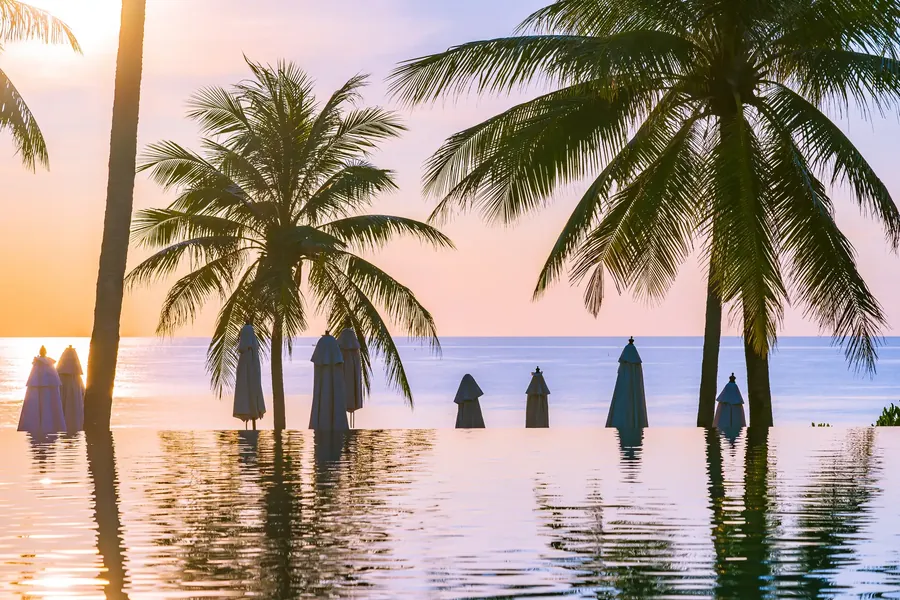
In the tropics the sun goes down fast and at almost the same time all year: around six, give or take half an hour. In the Mediterranean it varies from five in winter to nine in June. Those two facts decide what a day looks like in each place, and once you plan around them the heat stops being a problem and the light becomes the point.
The morning is the best part
Sunrise on the equator is around six, and the two hours after it are the coolest, clearest and emptiest of the day. Beaches are raked, the sea is glass, and the light is gold. Whatever the local time zone says about your body, being outside at seven is the fastest way to like a place. Swim first, breakfast second.
The midday gap
From eleven to three in the tropics, and from one to five in a Mediterranean summer, the sun is not something to sit under. Locals disappear, and the smart move is to copy them: lunch in the shade, a sleep, a museum, a cenote, a market with a roof. Children especially should be out of the sun in that window, whatever the temperature reads. The sunrise and sunset tool gives you the exact times for any destination on the map for any date, including the golden hour.
The sunset seat
Every place on this site has a sunset ritual: the west end of Rottnest, Canggu beach, Nungwi in Zanzibar, the cathedral steps in Palma, the Croisette. Book the sunset seat, not the dinner table: eat afterwards. Arrive forty minutes before the listed time, because the good light starts before the sun touches the sea and ends about twenty minutes after it sinks.
Where the sun is right now
The live sun map on the home page shows which destinations are in daylight, in golden hour or asleep this minute. I look at it in the morning the way other people look at the weather: somewhere on the map, it is always the perfect hour.
Keep reading
More from the notebook
Palms · 7 min read
The Palm Belt: where palms grow, and what it tells you about the weather
Palms are picky. Draw a line around the places they survive outdoors and you have drawn a map of where a beach holiday works. This is the map behind everything on Palmiana.

Nomads · 8 min read
Choosing your first sunny base as a digital nomad
Wifi, visas, cost and the people you will meet. The honest checklist for picking a warm place to work from for a month or a season.
Families · 6 min read
How to pick a beach for small children
Shade, shallow water, a lifeguard and a toilet within a hundred metres. The five things that matter more than white sand, and the palm destinations that have them.